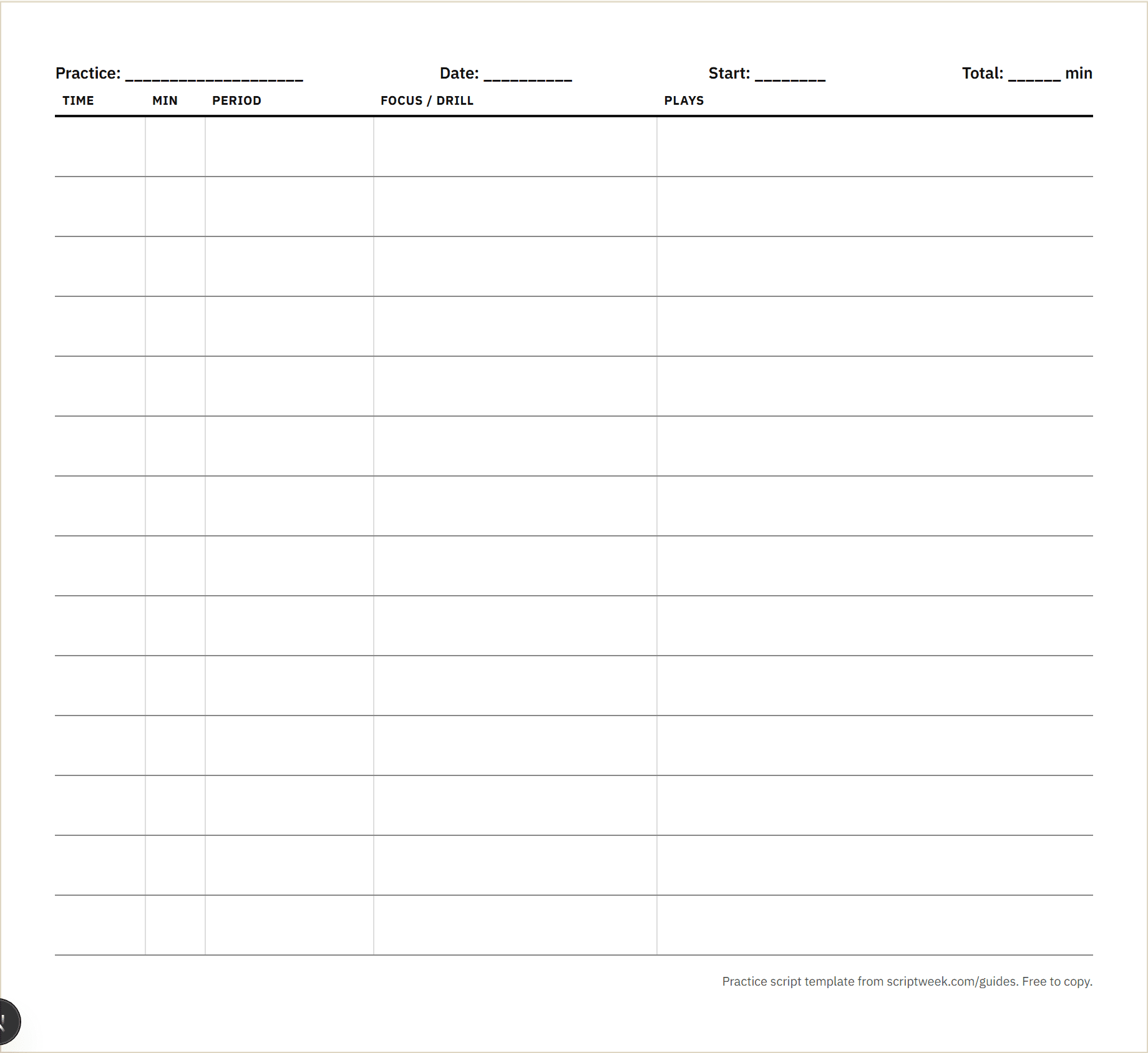
What a practice script is
A practice script is a clock with plays on it. Not warm up, then some team, then conditioning, but 5:40 to 5:55 is inside run against the Over front, and the plays are 31 Blast, 32 Blast, 38 Toss and 39 Toss, three from each hash. When the horn goes at 5:55, inside run is over whether it was good or not. That discipline is what makes a two hour practice feel like three.
How the columns work
- Time: the clock time the period starts. Write the first one, then add each period's minutes to get the next.
- Min: how long the period runs. The total at the top of the page should add up to your practice length.
- Period: the name. Walk through, indy, inside run, pass skel, team, special teams, water.
- Focus or drill: the one thing the period is for. Combo blocks against a 3 tech. Third down against Cover 3.
- Plays: the names, the hash and the rep count. This column is the point of the script.
How long a period should be
Five to fifteen minutes. Fourteen rows at that length is a two hour practice, which is why there are fourteen rows on this page. A period longer than fifteen minutes usually hides two periods, and a period that runs long steals from the ones at the end, which are usually special teams and the two minute drill. Those are the periods that decide close games. The horn is the horn.
Script the water breaks. They get skipped in September heat exactly when they matter most, and a break that is on the clock actually happens.
What to write in the plays column
The period that says team offense is a period with no plan. The one that says 31 Blast x3 L, 32 Blast x3 R, 38 Toss x2 is a period a position coach can prepare for and a scout team coach can align to. Write the play, the hash and the count. It looks like overkill on paper, and it is the single biggest difference between a staff that installs eight plays a week and one that installs four.
The shape of the week
- Tuesday is install. New plays in walk through and group, base plays in team. The heaviest day.
- Wednesday is situations. Third down, red zone, backed up, two minute. The call sheet's boxes become the team periods.
- Thursday is polish and special teams. Short and sharp, the openers scripted in order, then send them home and print the call sheet.
- Keep the skeleton the same every week and change the plays. A script that looks the same every Tuesday is a script the players run without being told.
Printing it for the staff
Every coach gets a copy on paper before practice, the scout team coach most of all, because he needs to know which front to show in which period. Letter paper, portrait, 100 percent scale. Fill in one master copy and photocopy it, or fill it in on screen with a PDF reader and print as many as you need. A clipboard and a pencil beat a phone on a practice field.
Building it in Script Week
In Script Week a script is timed periods on a real clock, the plays in each period come from your tagged library, and it prints one page for every coach. Filter to third and medium against Cover 3 and Wednesday's third down period is sitting there. Practice scripts are on the Coach plan and up; drawing and tagging the plays is free.