What is a football call sheet?
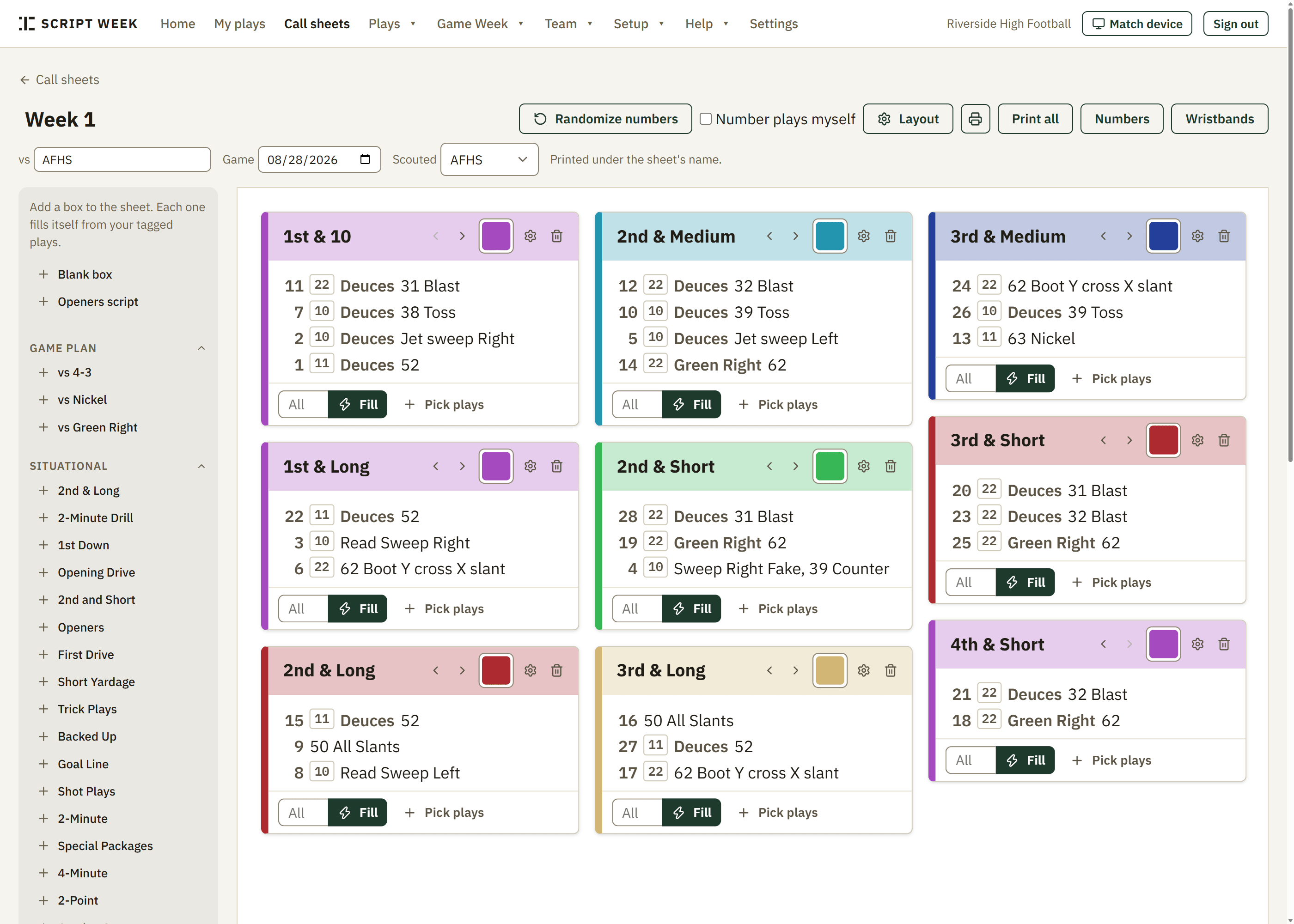
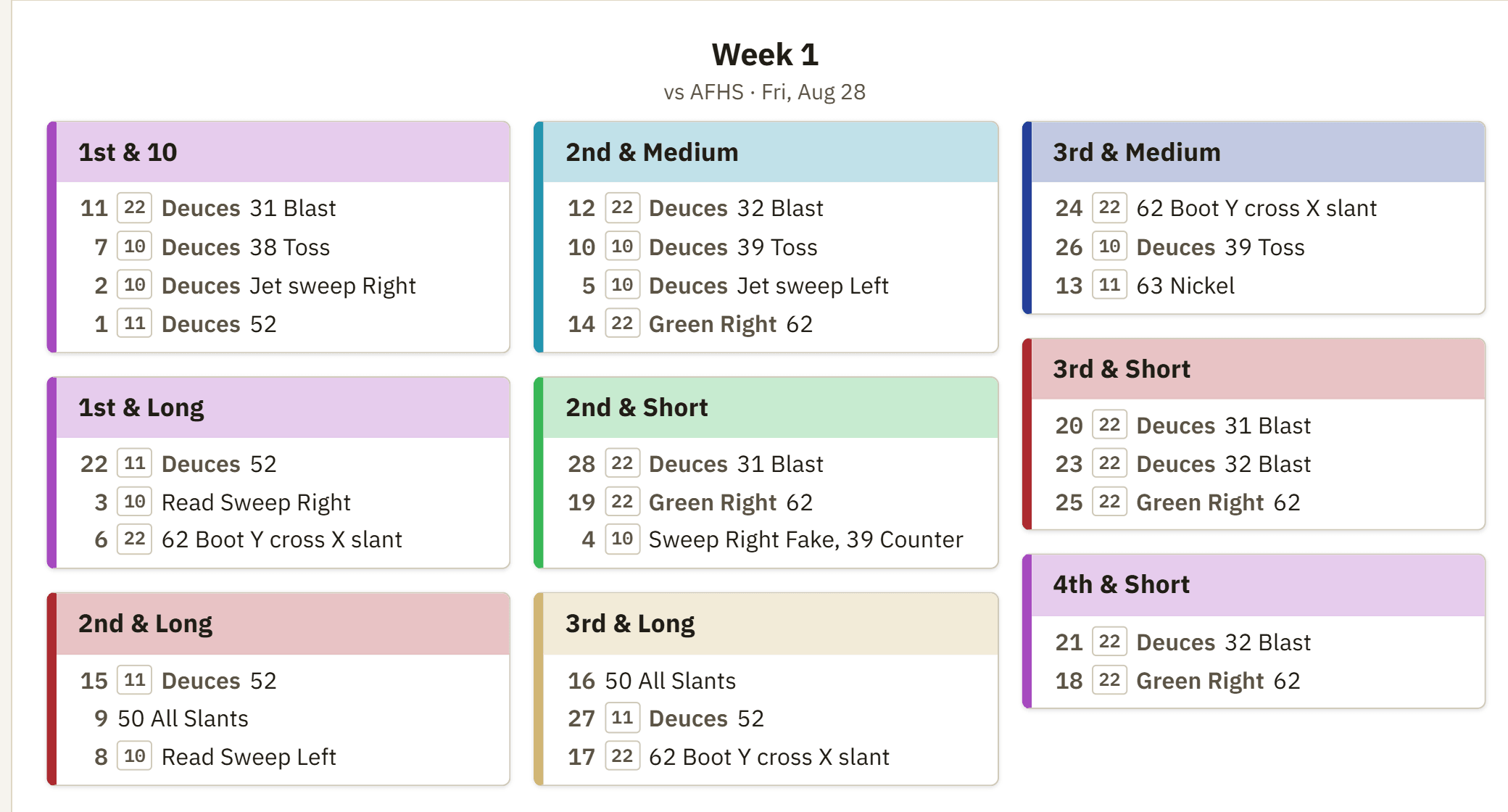
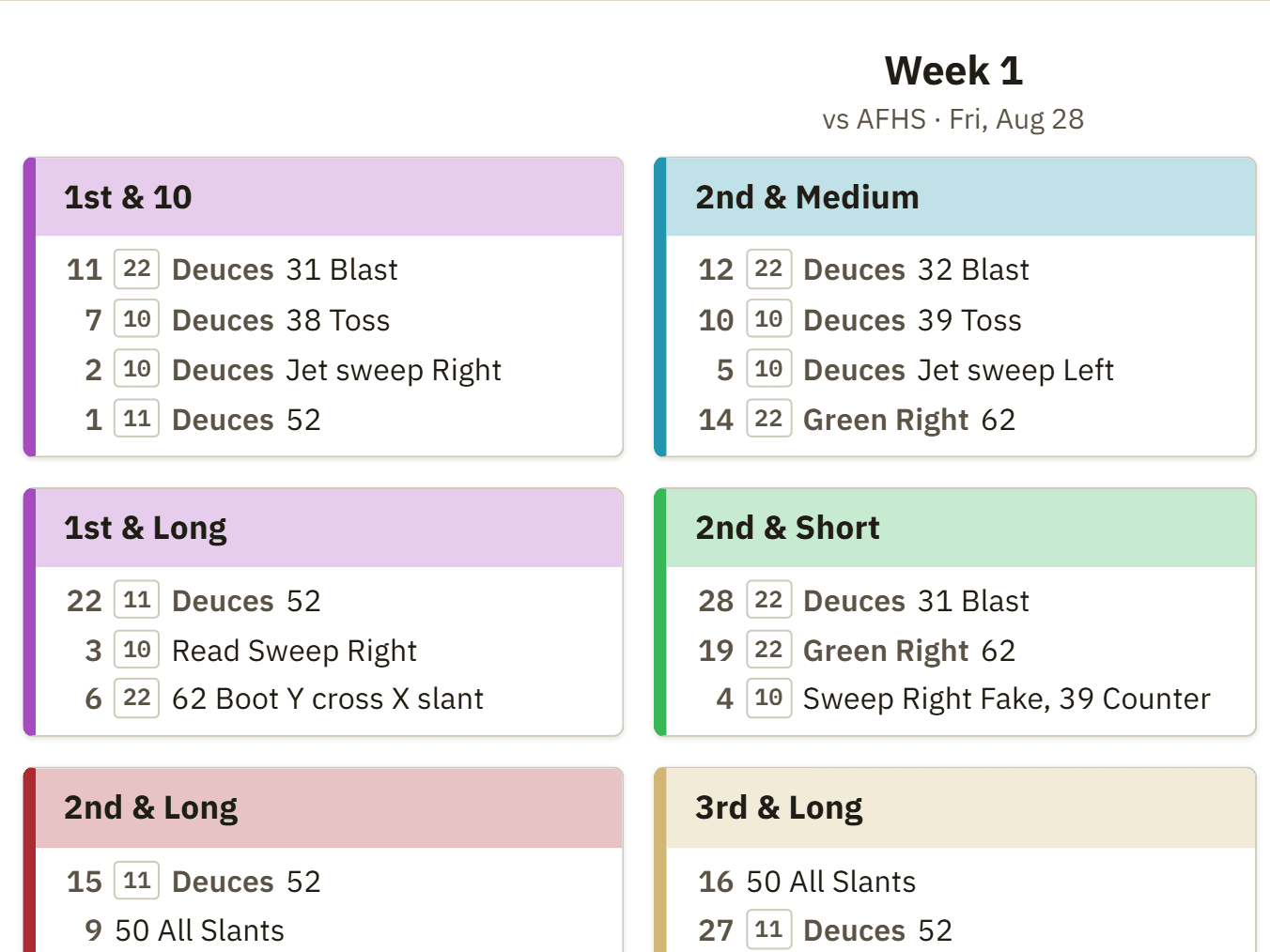
A call sheet is the one-page (sometimes two) sheet a play-caller holds on game day: plays grouped into the situations you expect to face (1st & 10, 3rd & short, red zone, two-minute, coming out), so the next call is a glance, not a search. In Script Week every box on the sheet fills itself from the plays you've tagged with that situation, the same sheet numbers the plays for wristbands, and it prints to letter paper.
How to build a football call sheet → · Free printable call sheet template →
How do the wristbands work?
Every play on a call sheet gets a call number. Script Week prints those numbers as wristband inserts, the small grid a quarterback or signal-caller slides into a wristband sleeve, sized for standard youth and high-school bands, one sheet per page. Renumber the call sheet and every band reprints to match; a play can also carry a decoy number so the defense can't decode the signals.
Free printable wristband insert template →
How much does Script Week cost?
Script Week is free for a single coach with up to 20 active plays, including the roster and depth chart. Paid plans start at $8/mo billed annually: Coach ($8/mo, $96/yr) for unlimited plays and game charting, Staff ($20/mo, $240/yr) for up to 10 coaches with scouting tools, Team ($33/mo, $400/yr) to add player accounts with installs and quizzes, and Program ($70/mo, $840/yr) to cover every team in a program under one bill. Month-to-month billing is available at a higher rate.
What each plan includes →
Do I pay per coach or per player?
No. Each plan is one flat price for your whole team. Add your coaches and players at no extra cost.
What each plan includes →
Is Script Week a replacement for Hudl?
For most of what a staff uses Hudl for, yes. With the Film add-on, Script Week hosts your game film, lets you clip every snap, mark it up, record a breakdown over it, and send a clip to a player with a note. It charts and grades every snap and rolls that into a self scout. Then it does the part Hudl doesn't: designing plays, tagging situations, building call sheets and wristbands, writing practice scripts, scouting opponents, and teaching players through the player app.
The one thing it does not do is exchange film with other schools. If your league trades film through Hudl, keep Hudl for the exchange and run the rest of your week in Script Week.
What game week looks like in Script Week →
How is Script Week different from FirstDown PlayBook or Football Play Card?
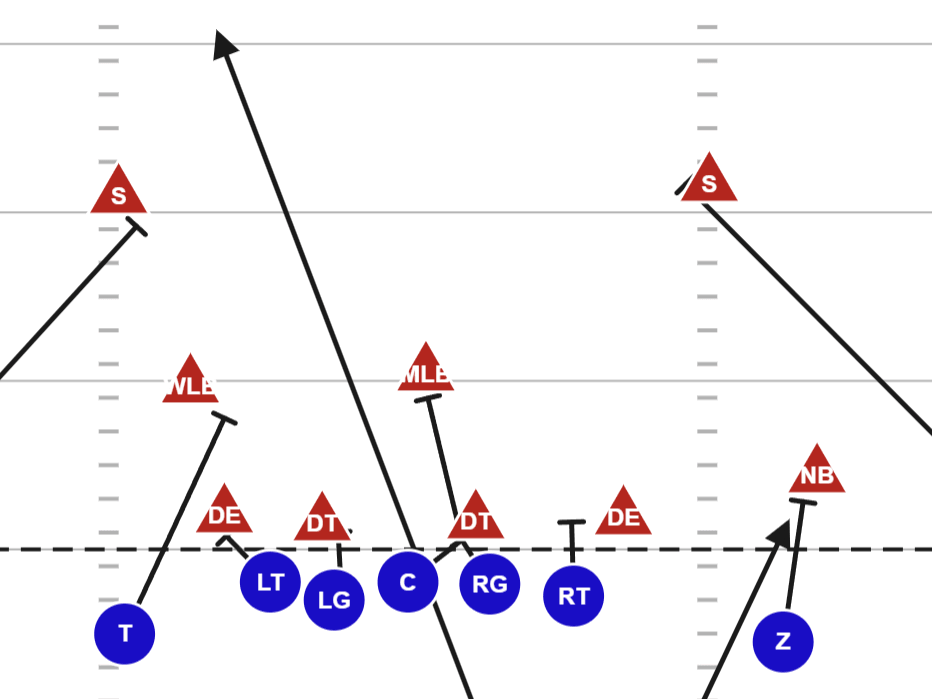
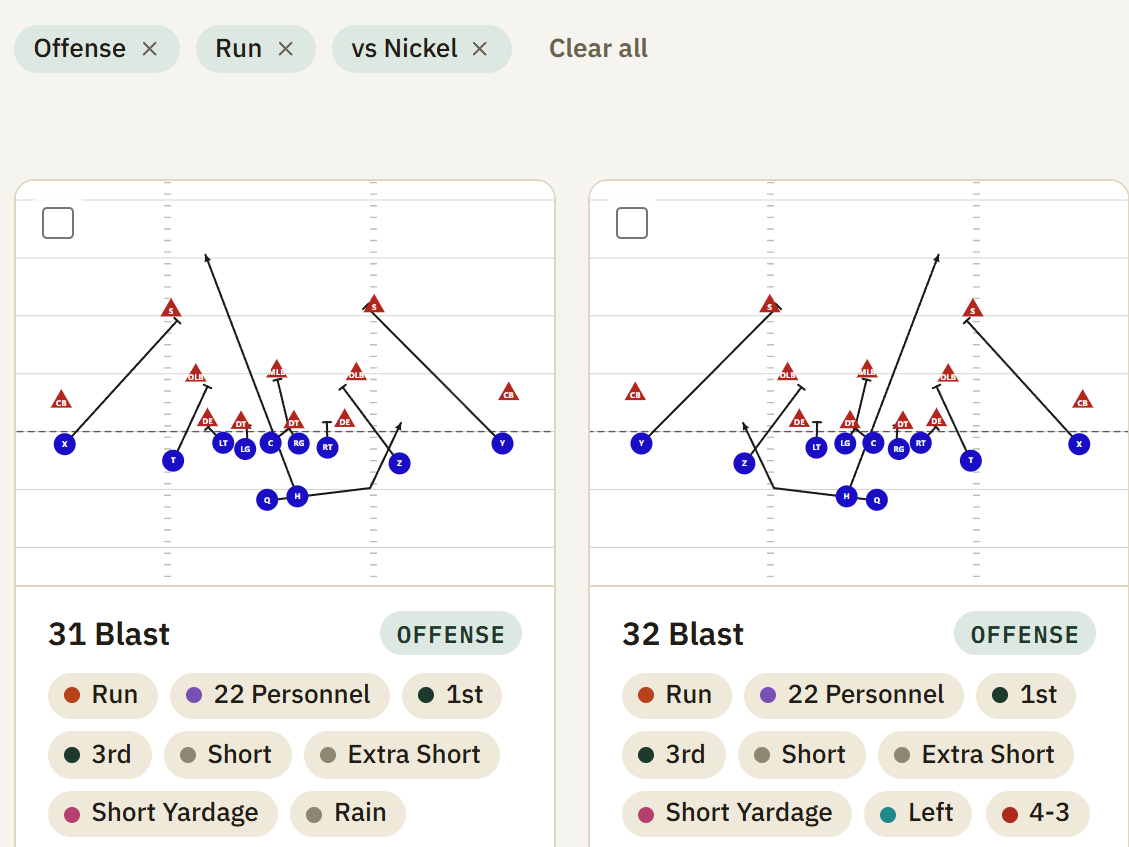
FirstDown PlayBook is built around its library of 35,000+ pre-drawn plays, and Football Play Card around printable play cards and wristbands. Script Week is built around situational tags: every play is tagged by down, distance, field zone, hash, personnel and any dimension your staff adds, the filters combine, and a call sheet box is one of those filters, so the sheet fills itself. The wristbands, practice scripts and player quizzes all come from the same tagged library. It also keeps one play against several defensive fronts instead of a copy per front, charts and grades every snap into a game report, and imports an old playbook from PDFs or images yourself, for free.
Where they lead: FirstDown's pre-drawn library is far bigger than our community library, and Football Play Card draws more flag formats, 4v4 through 12v12, where Script Week draws 5v5 flag and 11-man. The comparison table above has every row, checked against their own sites in October 2026.
Football call sheet software compared →
What levels of football is Script Week built for?
Youth and high school 11-man football, and 5v5 flag. Set a team to flag in Settings and the designer draws the NFL FLAG field with five-player formations, on every plan including Free. Program pricing is built for varsity/JV/youth organizations that share coaches and promote players year over year.
Flag football in Script Week → · Getting started →
Do my players need accounts?
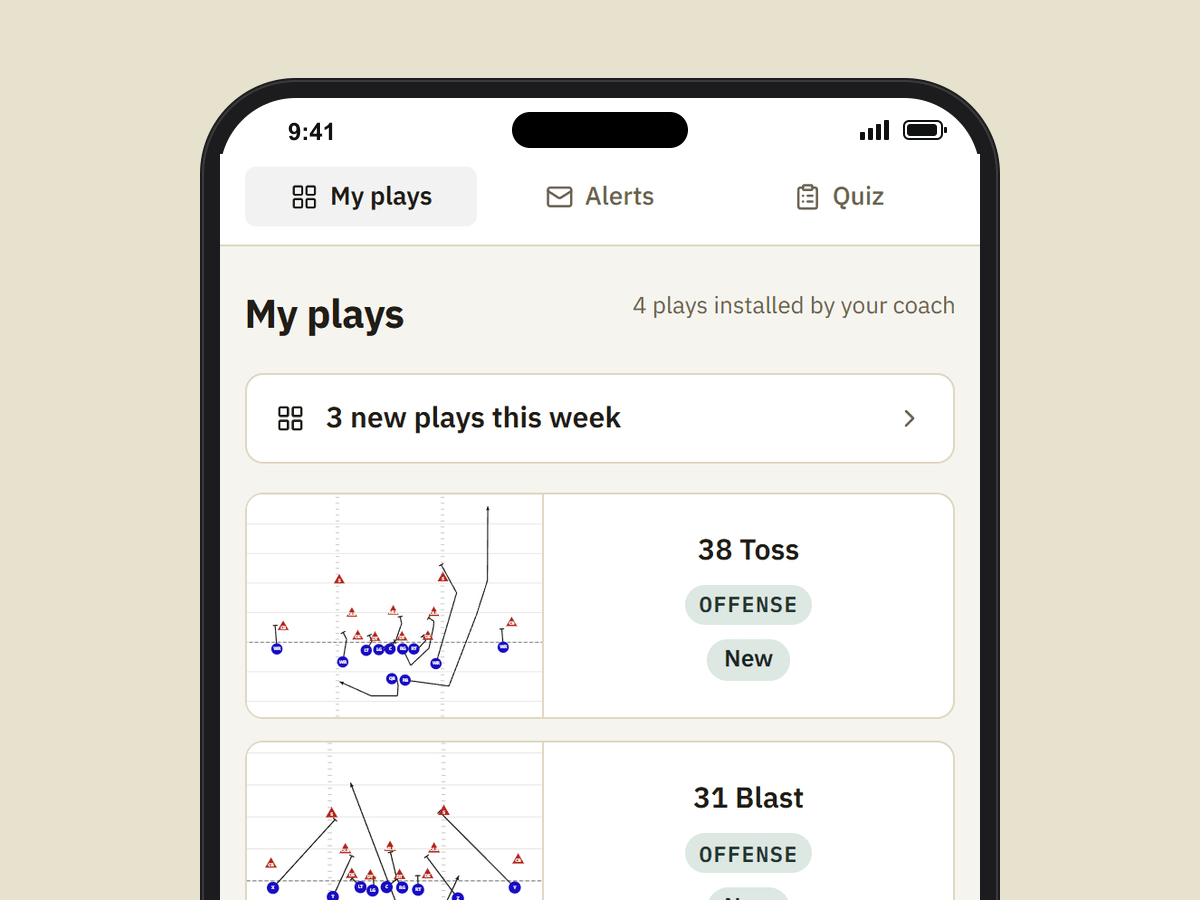
Only on the Team and Program plans. You make each player a username and a one-time starter code from the roster, so no player email is collected, and the player picks a password you never see. Players get a read-only app: the plays you install, alerts when the plan changes, auto-generated recognition quizzes, and any video walkthroughs you attach. They can't edit anything, and there's no messaging surface to moderate.
What we store about a player →
Will my price go up later?
No. The price you subscribe at is locked for as long as your subscription stays active. Future price changes only ever apply to new signups.
Cancelling and refunds →